
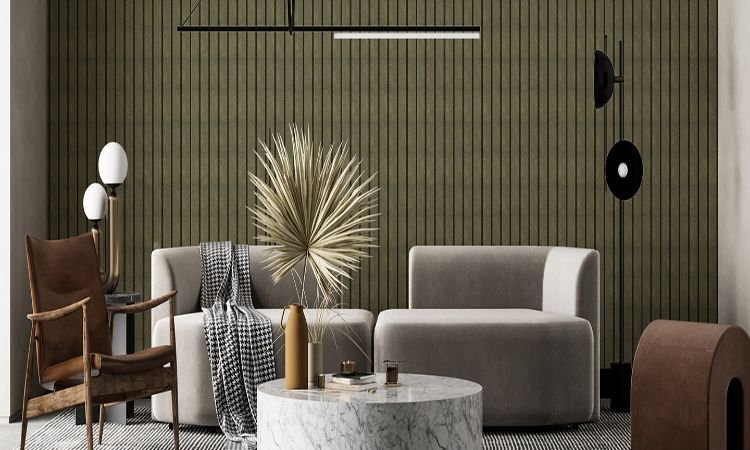
It is interesting how certain design elements can go from being purely functional to becoming a major style statement. Take Louvers, for example. Originally, they were just about airflow and keeping the rain out of windows, but walk into any modern Indian home in 2026, and you’ll likely see them used as high-end wall art, TV backdrops, or sophisticated partitions.
In the Indian context, where we are often trying to balance a desire for “luxury” with the practical realities of dust and humidity, louvers have really found their footing. They provide that rhythmic, 3D texture that a flat coat of paint just can’t replicate. If you are looking at your current space and thinking it feels a bit “flat,” here are five louver styles that fit the diverse aesthetics of Indian homes.
1. The Timeless Wooden Warmth
Most Indian homes have a deep-rooted love for wood. Whether it is a traditional ancestral house or a minimalist city apartment, wood brings a sense of groundedness. However, real timber in a humid climate can be a maintenance nightmare—it warps, it attracts termites, and it needs polishing.
This is where wood-grain finish louvers from Advance Laminates come in. They mimic the rich textures of teak, walnut, and oak so perfectly that you get the aesthetic of a premium wooden slat wall without the structural baggage. A vertical wooden louver panel behind a sofa or as a headboard adds immediate warmth and makes the room feel much more “tailored.”
2. Sleek Charcoal for Modern Minimalism
If your style leans more toward “quiet luxury” or industrial chic, charcoal louvers are arguably the best choice. These panels have a deep, matte finish that creates incredible depth. Because charcoal is a neutral but bold tone, it works as a fantastic “anchor” for a room.
Designers often use these to create a focal point behind a TV unit. The dark, recessed grooves of the flutes hide messy wiring perfectly and provide a sophisticated backdrop for a large screen. Plus, because they are often made from high-quality polymers, they are incredibly resistant to the scratches and scuffs that happen in high-traffic living rooms.
3. The Grandeur of Marble-Finish Louvers
There is a specific aesthetic in many Indian households that leans toward the opulent—think marble floors, gold accents, and high ceilings. Usually, putting marble on a wall is a heavy, expensive, and permanent commitment.
Marble-finish Louvers allow you to get that stone-cold elegance in a much more flexible way. You get the white and grey veining of Carrara or the deep richness of Portoro marble, but in a fluted format. It is a great way to add texture to a dining room or an entryway. It breaks up the “heaviness” of actual stone while keeping the luxury vibes intact.
4. Minimalist Monochromes and Pastels
For the younger generation of homeowners who are moving toward “Japandi” (a mix of Japanese and Scandinavian) or purely minimalist styles, solid-color louvers are a game-changer. Imagine a study room with soft sage green or a muted cream fluted wall.
These styles aren’t about being loud; they are about adding “rhythm.” The vertical lines draw the eye upward, making the standard 10-foot Indian ceiling feel much higher. Because these panels are stain-resistant and easy to wipe down, they are a practical alternative to wallpaper, which often peels or stains in our tropical weather.
5. Bold Metallic Accents
For those who want their home to feel like a high-end boutique hotel, metallic-finish louvers are the way to go. We are seeing a lot of brushed gold, bronze, and copper being used as “accent” strips. You don’t necessarily cover an entire wall in gold—that might be a bit much—but using a few metallic louver slats to break up a matte wall creates a stunning “light and shadow” play.
Why Louvers Make Practical Sense
Beyond the style, there is a very grounded reason why Advance Laminates focuses on these panels. Indian homes face unique challenges: high humidity, termites, and dust.
- Durability: Unlike wood, these louvers are often water-resistant and termite-proof.
- Installation: They are lightweight and “interlocking,” meaning you don’t have to deal with weeks of carpentry dust.
- Maintenance: A simple wipe with a soft cloth is usually enough to keep the flutes looking brand new.
When you think about it, we spend so much time on the furniture, but the walls are the biggest “canvas” in the house. Moving away from flat surfaces and toward the textured, architectural look of Louvers is a simple way to make a space feel “designed” rather than just “furnished.”
