
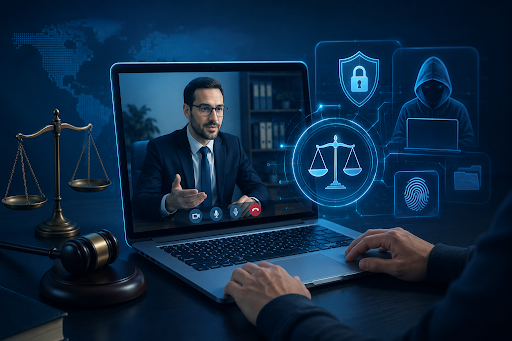
In this blog, we explain how online legal advice from Cyber Crime Lawyers simplifies the legal support process for cybercrime victims in India — cutting through the confusion, preserving evidence, and ensuring the right complaints are filed before critical windows close.
Something nobody tells you about being a cybercrime victim is how confusing the first few hours actually are. The fraud happened fast. A fake UPI link, a phishing call, a hacked account, morphed images circulating on WhatsApp groups. And now you are sitting with your phone, trying to figure out what to do — call the bank, file a police complaint, contact the platform, screenshot everything, call someone who might know what to do.
Most people freeze. Not because they are not smart. Because nobody told them what the right sequence was. And in cybercrime situations, the sequence matters enormously. The first hour and the first 24 hours determine how much is recoverable, how strong the case becomes, and whether the evidence that could identify the attacker still exists or has already disappeared.
This is exactly the problem that online attorney advice from Cyber Crime Lawyers solves. Not eventually — immediately. From wherever the victim is, at the moment it is actually needed.
The Traditional Legal Process and Why It Does Not Work for Cybercrime
Walk into any police station in India and report UPI fraud or cyberstalking. Here is what frequently happens:
- The officer at the desk is unfamiliar with the Information Technology Act, 2000 and the specific sections under the Bharatiya Nyaya Sanhita, 2023 that apply to digital offences. The complaint gets filed under a general cheating or fraud section. The IT Act provisions — which carry specific penalties and which courts take seriously in cyber cases — get missed entirely.
- The complaint goes into a general queue. Nobody contacts the bank with a preservation notice for the transaction records. Nobody sends an urgent request to the cyber crime portal to flag the beneficiary account before funds are withdrawn. Days pass. Evidence disappears. Recovery chances drop with every passing hour.
- This is not a criticism of individual officers. It is a structural reality — most police stations are not equipped for cyber complaints the way dedicated cyber crime cells are. And victims who do not know this difference end up in the wrong place, filing the wrong complaint, losing the narrow window they had.
- Online attorney advice from Cyber Crime Lawyers redirects this entire process. Before the victim steps anywhere near a police station, they understand exactly where to go, what to say, and what to ask for.
How Online Attorney Advice Actually Changes the Experience
When someone’s bank account has just been drained or private images have just been posted without consent — the emotional state is not one that supports clear decision-making. Panic, shame, anger, and fear hit simultaneously:
Immediate Clarity at the Worst Possible Moment
Online attorney advice provides the one thing that cuts through all of that. A clear, specific answer to: what do you do right now?
Call 1930 immediately. File on cybercrime.gov.in. Notify the bank and request transaction freeze. Screenshot everything before it disappears. Do not delete any communication from the attacker — even if it is distressing to have on the phone. These steps, explained clearly by Cyber Crime Lawyers in the first conversation, change outcomes in ways that cannot be replicated if the victim waits two days to figure out the right process.
The Right Complaint to the Right Authority
Cybercrime complaints in India do not all go to the same place. Financial fraud goes to the cyber crime portal and potentially triggers the 1930 helpline mechanism. Data breaches by companies trigger CERT-In notification obligations. Morphed images and intimate content threats invoke specific sections under IT Act Section 66E and Section 67. Corporate hacking cases may involve the Indian Computer Emergency Response Team alongside police action. Cyberstalking has its own provisions under BNS Section 78.
Getting this routing right matters enormously. A financial fraud complaint filed only at the local police station — without simultaneously using the 1930 mechanism — loses the bank freeze window. A morphed image complaint filed without invoking the correct IT Act sections loses the legal teeth those provisions provide.
Cyber Crime Lawyers who handle these cases regularly know exactly where each type of complaint needs to go and what it needs to say to be taken seriously. Online attorney advice delivers that knowledge to the victim in the first consultation — not after weeks of back-and-forth.
Evidence Preservation Before It Is Too Late
Digital evidence in cybercrime cases has a shelf life that physical evidence does not:
A social media account used to send harassing messages gets deactivated. An email linked to the fraud disappears. Transaction logs that could trace the movement of funds get overwritten. Screenshots saved on a phone without proper metadata preservation may be challenged in court as unverifiable.
Cyber Crime Lawyers advise victims on exactly what to capture, how to capture it – including hash verification of digital files for court admissibility – and which platforms to send legal preservation notices to. When a victim sends a legally formatted preservation notice to a social media platform citing specific legal provisions, the platform is obligated to hold that data. Without that notice, the data disappears on the platform’s own timeline.
Handling Sensitive Situations With Privacy
This is an aspect of online attorney advice that does not get discussed enough:
- Many cybercrime situations are deeply personal. Intimate image abuse. Online blackmail using private photographs. Account hacks that exposed private communications. Social media harassment that the victim is ashamed to report publicly.
- Walking into a police station and explaining these situations in person — to officers who may or may not respond with appropriate sensitivity — is a barrier that stops a significant number of victims from seeking help at all. The harm continues because reporting felt too humiliating.
- Online attorney advice removes that barrier. A victim can explain exactly what happened through a private call or chat with Cyber Crime Lawyers, receive a clear action plan, and understand their legal rights — without having to face anyone in person, without the conversation happening in a public setting, and without the shame that in-person reporting can carry.
What the 2026 Legal Landscape Means for Cybercrime Victims
Cybercrime law in India has been moving quickly. The transition from the IPC to the Bharatiya Nyaya Sanhita, 2023, updated several provisions relevant to digital offences. The IT Act, 2000 and its amendments continue to govern most cyber-specific offences. CERT-In’s 2022 reporting directions — which require companies to report certain incidents within six hours — have changed corporate obligations around data breaches.
For individual victims, what this means practically is that the legal landscape they are navigating is more complex than it was even two years ago. The sections that apply, the authorities with jurisdiction, and the procedures for filing complaints have changed or been updated. Cyber Crime Lawyers who actively practise in this area are current on these changes. Online attorney advice from someone who handled a similar case last week is fundamentally different from advice based on how the law worked in 2022.
The 1930 helpline has also expanded its capacity and integration with banking systems in 2025-26. Complaints filed through this mechanism can now trigger faster bank action than was possible earlier — but only when the complaint is filed quickly and correctly. Online attorney advice helps victims use this mechanism at maximum effectiveness during the window when it actually works.
The Comparison That Makes the Case
| Without Online Attorney Advice | With Online Attorney Advice | |
| Time to first right action | Hours to days — figuring out the process | Minutes — clear steps immediately |
| Complaint filing | Wrong authority, wrong sections, general FIR | Right portal, right sections, right sequence |
| Evidence preservation | Accidental deletion, format issues | Preserved correctly, legally admissible |
| Bank freeze request | Often missed or filed too late | Filed within the critical window |
| Sensitive cases | Barrier to reporting — shame, exposure | Private, immediate, judgment-free |
| Ongoing case management | Unclear, untracked, stalled | Structured follow-up, active pursuit |
The difference in outcomes between these two columns is not theoretical. It is what experienced Cyber Crime Lawyers see in the cases that come to them — the ones where the victim acted in the first hours and the ones where they waited.
Why Choose Vakilsearch
Vakilsearch connects cybercrime victims with experienced Cyber Crime Lawyers who handle financial fraud, identity theft, cyberstalking, data breaches, morphed image cases, online extortion, and corporate cyber incidents. Online attorney advice is available immediately — the same day the incident happens — so evidence is preserved, complaints go to the right authorities, and the victim’s legal position is protected from the first hour. From the initial consultation through complaint filing, court proceedings, and platform takedowns, Vakilsearch manages every stage with the urgency cybercrime situations require.
FAQs
- Why is online attorney advice better than going to a police station for cybercrime complaints?
Most local police stations are not equipped for cyber-specific complaints and frequently file them under general sections that miss the IT Act provisions needed for effective investigation. Online attorney advice from Cyber Crime Lawyers ensures the complaint goes to the right authority — the cyber crime portal, the 1930 helpline for financial fraud, dedicated cyber cells — with the right sections invoked and the right evidence requests made. This routing difference significantly affects how quickly banks and platforms respond and how effectively investigations proceed.
- How quickly should a cybercrime victim seek online attorney advice?
Immediately — within the first few hours of the incident if at all possible. Financial cybercrime cases have a critical window during which the 1930 helpline mechanism can trigger bank freezes before funds are withdrawn. Digital evidence — social media accounts, transaction logs, communication records — disappears within hours or days if preservation notices are not sent promptly. Cyber Crime Lawyers accessed through online attorney advice know exactly what needs to happen in those first hours and can direct every step before the window closes.
- Can online attorney advice help with sensitive cybercrime situations like morphed images or online blackmail?
Yes — and for these situations specifically, online attorney advice is often the only form of legal help victims will actually use. The privacy of a remote consultation with Cyber Crime Lawyers removes the barrier that stops many victims of intimate image abuse, online extortion, and harassment from seeking help at all. The lawyer assesses the situation confidentially, identifies the applicable IT Act provisions — Section 66E for intimate image capture, Section 67 for obscene content, BNS provisions for criminal intimidation — and provides a clear action plan including platform takedown requests and FIR filing guidance.
- What happens after the initial online attorney advice consultation for a cybercrime case?
After the initial consultation, Cyber Crime Lawyers provide a structured action plan covering immediate steps – evidence preservation, 1930 complaint, bank notification, platform reports – followed by formal FIR filing at the appropriate cyber crime authority with the correct legal provisions. Where ongoing harm is being caused – circulating content, continuing harassment, account access – Cyber Crime Lawyers can apply for urgent interim injunctions from courts directing platforms to remove content or restraining the perpetrator. The consultation is the starting point of a structured legal process, not a one-time information exchange.
