
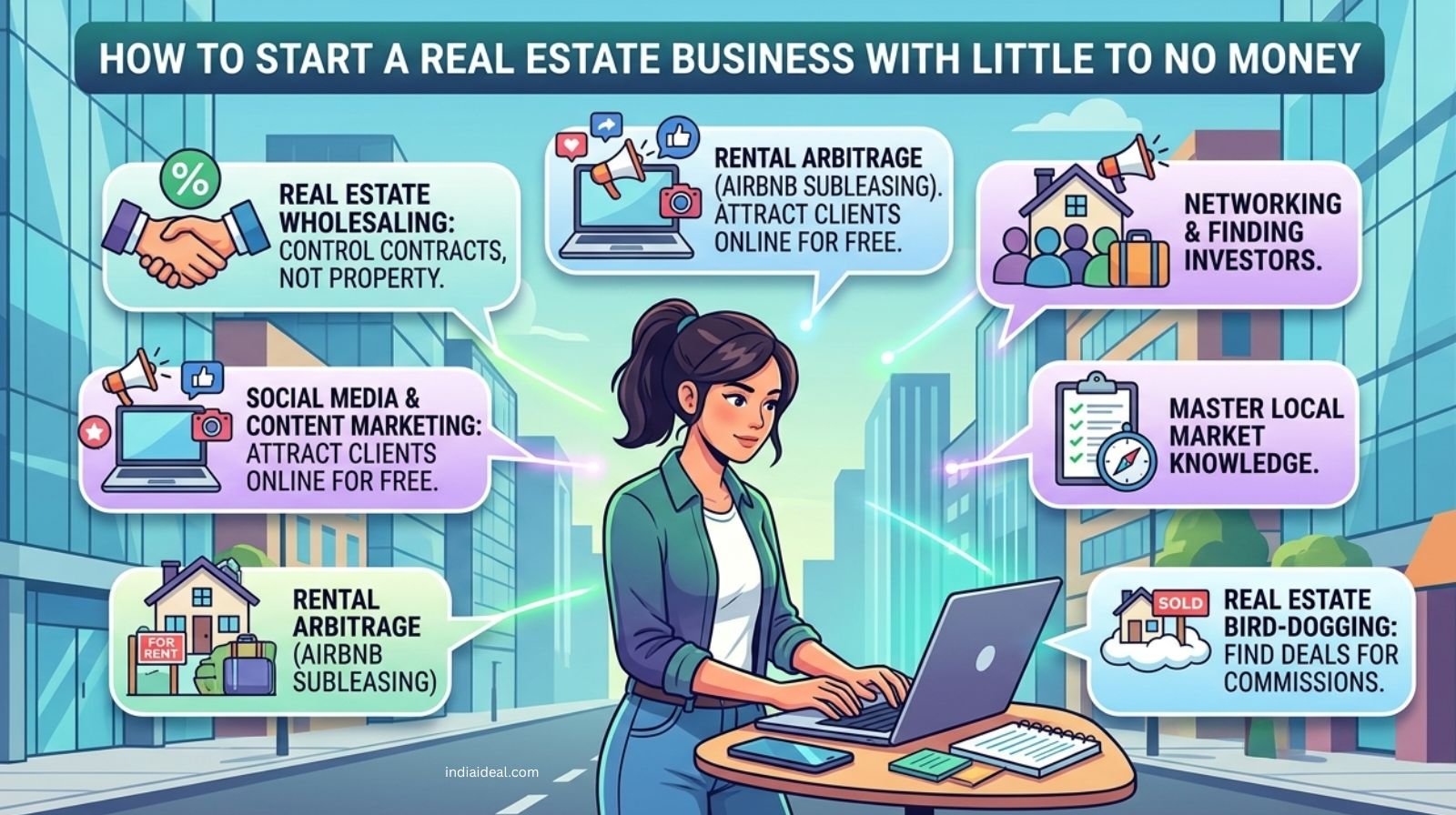
The old myth that you need a massive bank account to enter the real estate market is officially dead. In 2026, information, networking, and creative strategy are the new currencies. Whether you are a student, a 9-to-5 worker, or someone looking for a fresh start, the doors to property investment and real estate entrepreneurship are wide open—even with a $0 balance.
This guide will walk you through the exact blueprints used by successful moguls to build empires from scratch. We’re moving past the “save for ten years” advice and diving straight into high-leverage tactics.
1. Master the Art of Real Estate Wholesaling
Real estate wholesaling is arguably the fastest way to generate capital without ever owning a property. As a wholesaler, you act as the middleman. Your job is to find a distressed property, get it under contract at a discount, and then assign that contract to a cash buyer for a fee.
-
Find Motivated Sellers: Look for owners who need to sell quickly due to relocation, financial distress, or inherited properties.
-
The Assignment Fee: You don’t buy the house; you sell the right to buy it. A typical fee can range from $5,000 to $20,000 per deal.
-
Zero Risk: Since you never actually close on the property with your own money, your financial risk is virtually non-existent.
2. Become a Professional Bird Dog
If wholesaling feels a bit too technical to start, try bird dogging. A bird dog is a scout who finds “hot deals” for seasoned real estate investors.
-
Spotting Opportunities: You spend your time “driving for dollars,” looking for abandoned houses, overgrown lawns, or “For Sale By Owner” signs.
-
Referral Fees: When you pass a lead to an investor and they close the deal, they pay you a referral fee.
-
Building a Network: This is the ultimate “learn while you earn” model. You get paid to learn how experts evaluate profitable real estate deals.
3. Leverage “Subject-To” Financing
In a Subject-To deal, you purchase a property “subject to” the existing mortgage. This means the seller transfers the title to you, but the original loan stays in their name. You simply take over the monthly payments.
-
No Bank Needed: You don’t need to qualify for a new loan or have a high credit score.
-
Help the Seller: This is a lifesaver for sellers who are behind on payments and want to avoid foreclosure.
-
Instant Equity: You gain control of an asset and its future appreciation without a down payment.
4. The Power of Seller Financing
Seller financing (or owner financing) happens when the person selling the home acts as the bank. Instead of you giving them a lump sum from a mortgage lender, you make monthly installments directly to the seller.
-
Negotiable Terms: Since there is no institutional lender, you can negotiate a 0% down payment or a lower interest rate.
-
Win-Win Scenario: The seller gets a steady stream of monthly income (often with interest), and you get a property without a traditional bank’s red tape.
-
Fast Closings: Without bank appraisals and long underwriting processes, these deals can close in days.
5. House Hacking: Live for Free
House hacking is the ultimate strategy for beginners who want to own a home but have no budget for a mortgage. The goal is to buy a multi-unit property (like a duplex or triplex), live in one unit, and rent out the others.
-
Low-Down Payment Loans: Use government-backed programs like FHA loans (3.5% down) or VA loans (0% down for veterans).
-
Tenants Pay Your Mortgage: In many cases, the rent from your tenants covers the entire mortgage, allowing you to live for free while building home equity.
-
Scaling Up: Once you’ve built equity, you can refinance, pull out cash, and buy your next property.
6. Start a Property Management Company
You don’t need to own buildings to profit from them. Many real estate investors own dozens of properties but don’t have the time to manage them.
-
Service-Based Income: You handle tenant screening, rent collection, and maintenance coordination.
-
Monthly Retainers: Typically, managers charge 8% to 12% of the monthly rental income.
-
Low Startup Costs: All you need is a laptop, a phone, and a solid understanding of local landlord-tenant laws.
7. Lease Options (Rent-to-Own)
A lease option gives you the right to lease a property with the “option” to buy it at a set price in the future. This is often called a “sandwich lease” when you sub-lease it to another tenant for a profit.
-
Control Without Ownership: You control the property for a small “option fee” (which can sometimes be negotiated to zero or paid via sweat equity).
-
Profit from Appreciation: If the property value goes up during your lease term, you keep the difference when you exercise your option to buy or sell.
-
Cash Flow: You can charge your sub-tenant more than what you pay the owner, creating immediate monthly cash flow.
8. Real Estate Partnerships
If you have the “hustle” but no “capital,” find someone who has the “capital” but no “time.” This is the cornerstone of real estate syndication and joint ventures.
-
Sweat Equity: You do the legwork—finding the deal, negotiating, and managing the renovation.
-
The Silent Partner: Your partner provides the funds for the down payment and repairs.
-
Equity Split: You split the profits 50/50 or 70/30. You’ve just started a real estate business using other people’s money (OPM).
Key Skills for Success in 2026
To succeed in a no-money-down real estate venture, you must sharpen these three specific skills:
-
Negotiation: You aren’t competing on price; you’re competing on your ability to solve the seller’s problem.
-
Market Analysis: You must be able to spot an undervalued property faster than the Zillow algorithms.
-
Digital Networking: Use LinkedIn and Instagram to connect with private money lenders and local developers.
Step-by-Step Action Plan to Start Today
-
Choose Your Niche: Don’t try to wholesale and house hack at the same time. Pick one strategy and master it.
-
Build a “Cash Buyers” List: Join local Real Estate Investment Associations (REIA) and find out who is actually buying properties in your zip code.
-
Analyze 10 Deals a Day: Use free tools to calculate the Return on Investment (ROI) and Cap Rate for local listings. Even if you aren’t buying, this builds your “deal muscle.”
-
Send Direct Mail or Cold Call: Reach out to owners of distressed properties. The more “No’s” you get, the closer you are to a “Yes.”
-
Reinvest Your First Check: Once you close your first wholesaling deal, don’t buy a new car. Use that money to fund marketing or your first small down payment.
The Bottom Line
Starting a real estate business without money isn’t just a dream; it’s a strategic pivot. By focusing on creative financing, wholesaling, and partnerships, you remove the barrier of entry. In the modern economy, the person who finds the deal holds the power, not just the person who holds the checkbook.
