
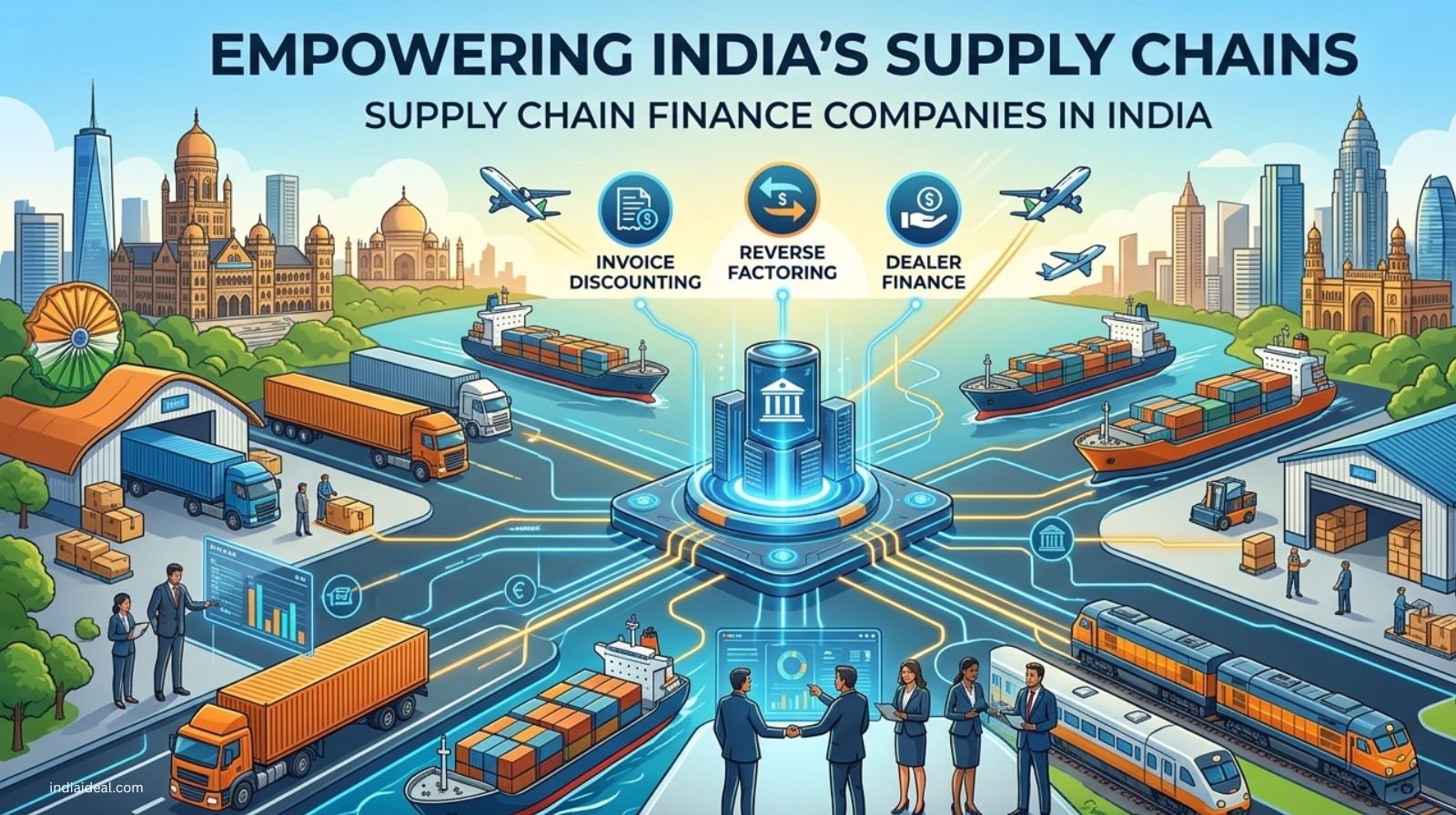
In the rapidly evolving economic landscape of 2026, India has solidified its position as a global manufacturing and services hub. However, behind every successful “Make in India” story lies a complex network of suppliers, distributors, and retailers. The silent fuel keeping this massive engine running is Supply Chain Finance (SCF).
For decades, small and medium enterprises (SMEs) struggled with “frozen” working capital—money stuck in unpaid invoices for 60, 90, or even 120 days. Today, Supply Chain Finance Companies in India have revolutionized this, turning accounts receivable into immediate cash.
If you are a business owner looking to optimize your Working Capital, or a CFO aiming to strengthen your vendor ecosystem, this deep dive into the world of SCF is your roadmap to financial agility.
1. What is Supply Chain Finance? (The Basics)
Supply Chain Finance is a suite of tech-enabled solutions that lowers financing costs and improves business efficiency for both buyers and sellers in a sales transaction. Unlike a traditional bank loan, which is based on the borrower’s balance sheet, SCF is based on the Creditworthiness of the large corporate buyer (the “Anchor”).
Essentially, it allows the supplier to get paid early by a financial institution, while the buyer gets to pay at a later date. It’s a win-win-win scenario that eliminates the “liquidity crunch” often found in traditional trade cycles.
2. Why the Sudden Boom in the Indian SCF Market?
India’s Fintech Ecosystem has matured at a breakneck speed. Several factors have contributed to the rise of specialized SCF providers:
-
TReDS (Trade Receivables Discounting System): An RBI-led initiative that provides an electronic platform for discounting the invoices of MSMEs against large corporates.
-
GST Integration: Real-time data from GST Returns allows finance companies to verify the authenticity of invoices instantly, reducing fraud and speeding up approvals.
-
Digital India: The shift toward paperless documentation means a Supply Chain Loan that used to take weeks to process now happens in hours.
-
The Credit Gap: With traditional banks often hesitant to lend to small suppliers without collateral, Non-Banking Financial Companies (NBFCs) and Fintechs have stepped in to fill the void.
3. Top Supply Chain Finance Companies in India (2026 Edition)
The market is a mix of traditional banking giants, nimble Fintech startups, and specialized NBFCs. Here are the leaders currently shaping the industry:
A. KredX
Known as India’s largest supply chain finance platform, KredX connects MSMEs with institutional investors. They specialize in Invoice Discounting, allowing businesses to gain access to working capital within 24 to 72 hours. Their tech-first approach makes them a favorite for fast-growing startups.
B. CredAvenue (Yubi)
Yubi has become a powerhouse in the debt market. Their supply chain module provides an end-to-end digital experience for anchors and their entire supplier base. They use sophisticated Data Analytics to offer customized credit limits.
C. M1xchange
As one of the pioneers of the TReDS platform, M1xchange has been instrumental in helping MSMEs get competitive interest rates through an auction-based model. Multiple banks bid on a single invoice, ensuring the supplier gets the lowest possible Cost of Funds.
D. Cashe & LendingKart
While often associated with personal or business loans, these players have expanded aggressively into Vendor Financing. They leverage alternative data—like social media footprints and digital transaction history—to lend to “new-to-credit” suppliers.
E. Traditional Banks (HDFC, ICICI, SBI)
Not to be outdone, the “Big Three” of Indian banking have launched specialized digital portals for Channel Financing and Reverse Factoring. Their advantage lies in their massive capital reserves and existing corporate relationships.
4. Key SCF Products You Should Know
Understanding the terminology is half the battle. Here are the core products offered by these Supply Chain Finance Companies:
-
Invoice Discounting: The supplier sells their “unpaid” invoices to a financier at a small discount to get immediate cash.
-
Reverse Factoring: The buyer (Anchor) initiates the process to help their suppliers get paid early. This often leads to better interest rates because the risk is tied to the large buyer.
-
Purchase Order (PO) Financing: Financing provided before the goods are even shipped, based on a confirmed purchase order from a reputable buyer.
-
Channel Financing: Providing credit to distributors or retailers so they can buy more stock from the manufacturer. This boosts the Sales Velocity of the entire chain.
5. The Role of Technology: AI and Blockchain in SCF
In 2026, Supply Chain Finance is no longer just about lending; it’s about deep-tech integration.
-
Artificial Intelligence (AI): Used for Credit Scoring. AI models analyze thousands of data points to predict the likelihood of a default long before it happens.
-
Blockchain: Several Indian SCF companies are experimenting with Smart Contracts. This ensures that once a delivery is verified digitally, the payment is triggered automatically, eliminating human intervention and delays.
-
Cloud Accounting: Most SCF platforms now sync directly with a company’s ERP system (like SAP or Tally), making the application for a Line of Credit as simple as clicking a button.
6. Benefits for MSMEs and Small Suppliers
For a small business owner, partnering with an SCF company offers more than just cash:
-
Collateral-Free Funding: Unlike a bank mortgage, you don’t need to pledge your factory or home. The “Invoice” is the collateral.
-
Improved Credit Score: Timely repayment of SCF loans helps build a robust CIBIL Score, making it easier to get larger loans in the future.
-
Growth Capital: Instead of waiting for money to come in, you can use the immediate cash to take on larger orders and scale your business.
-
Operational Efficiency: Automated platforms reduce the time spent chasing payments, allowing you to focus on Product Quality and innovation.
7. Benefits for Corporate Anchors (The Buyers)
Large corporations benefit just as much as their suppliers do:
-
Supply Chain Stability: By ensuring your suppliers are liquid, you reduce the risk of production delays caused by a vendor’s financial failure.
-
Extended Payment Terms: Many SCF arrangements allow the buyer to pay the financier later than the original invoice date, effectively improving the buyer’s Days Payable Outstanding (DPO).
-
Better Pricing Power: When you offer early payment options to your suppliers, you are in a stronger position to negotiate Bulk Discounts.
8. Challenges to Watch Out For
Despite the impressive growth, the SCF sector in India faces certain hurdles:
-
Digital Divide: Small suppliers in Tier 3 cities may still struggle with the high-tech requirements of modern Fintech Platforms.
-
Legal Hurdles: Dealing with disputed invoices or returns can complicate the “recourse” process between the financier and the supplier.
-
Cybersecurity: As the industry moves toward 100% digital transactions, the risk of data breaches and Identity Theft remains a top concern for regulators like the RBI.
How to Choose the Right SCF Partner?
Selecting from the many Supply Chain Finance Companies in India requires a strategic approach. Consider the following:
-
Turnaround Time (TAT): How quickly can they move from invoice upload to cash in the bank?
-
Integration Ease: Does their software talk to your current accounting system?
-
Transparency: Are there hidden processing fees or “convenience charges”?
-
Customer Support: When a transaction gets stuck, do you get a bot or a human expert?
Conclusion: The Future is Funded
Supply chain finance is the bridge between a company’s potential and its performance. In India, the synergy between Regulatory Support, Technological Innovation, and Entrepreneurial Spirit has made SCF more accessible than ever.
Whether you are a manufacturer in Pune, a textile exporter in Tirupur, or a tech giant in Bengaluru, leveraging the power of Supply Chain Finance Companies is no longer optional—it is a competitive necessity. By unlocking the value trapped in your invoices, you aren’t just managing debt; you are mastering Cash Flow Management.
The future of Indian business is not just about making more; it’s about moving faster. And with the right SCF partner, your business can move at the speed of light.
