
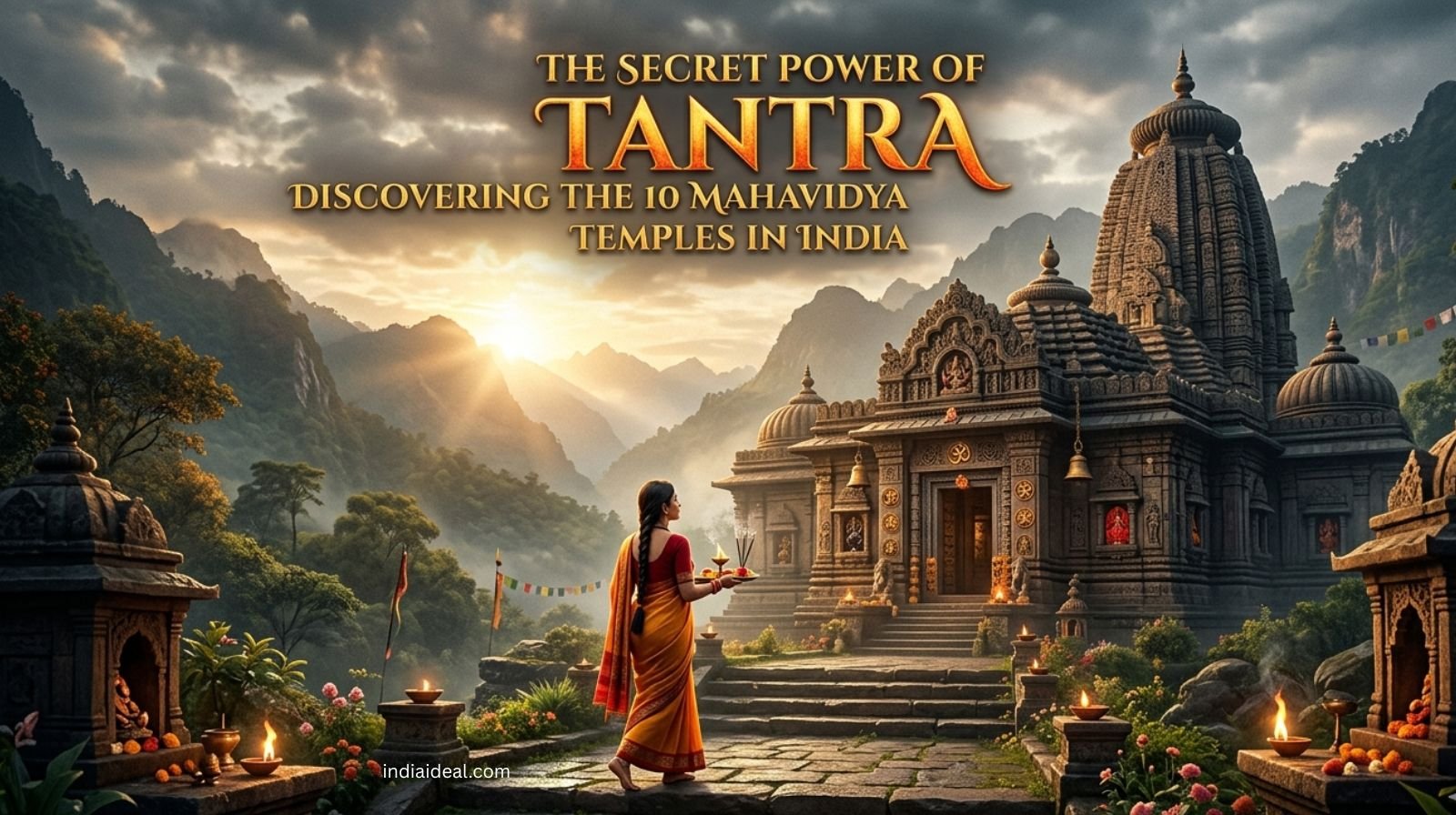
In the mystical heart of the Indian spiritual landscape lies a profound secret known to few but revered by millions—the Dasa Mahavidyas. These “Ten Great Wisdoms” represent ten distinct facets of the Divine Mother, ranging from the terrifyingly fierce to the breathtakingly beautiful. In 2026, as more seekers turn toward authentic Tantric traditions, a pilgrimage to the mahavidya temples in India has become the ultimate spiritual journey for those seeking transformation, protection, and enlightenment.
Whether you are a devout follower of Shaktism or an curious traveler, these sacred sites offer an energy unlike any other. They are not just places of worship; they are power centers where ancient rituals meet cosmic energy. Let’s embark on a journey through the ten most powerful mahavidya temples in India that every spiritual seeker must visit at least once in their lifetime.
1. Maa Kamakhya Temple: The Heart of the Mahavidyas
Located atop the Nilachal Hills in Guwahati, Assam, the Kamakhya Temple is the supreme seat of Tantra. It is unique because the entire complex is a constellation of shrines dedicated to all ten goddesses.
-
The Presiding Deity: While Maa Kamakhya (Tripura Sundari) is the main goddess, the temple complex houses individual shrines for every single Mahavidya.
-
The Sacred Mystery: In the inner sanctum, there is no idol; instead, the goddess is worshipped in the form of a natural spring flowing through a stone fissure.
-
Best Time to Visit: The Ambubachi Mela is the most significant time, celebrating the earth’s fertility.
2. Kalighat & Dakshineswar: The Abodes of Maa Kali
Kolkata is the city of the first Mahavidya, Maa Kali. Two temples here stand out as the most potent centers of her energy.
-
Kalighat: One of the 51 Shakti Peethas, where Sati’s toes are said to have fallen. The idol with the golden tongue is an iconic representation of the goddess of Time.
-
Dakshineswar: Famous as the workplace of Saint Ramakrishna Paramhansa, this temple on the banks of the Hooghly represents the motherly, protective side of Kali.
-
Spiritual Tip: Visiting these mahavidya temples in India during Kali Puja offers a glimpse into the raw, ecstatic devotion of Bengal.
3. Tara Tarini & Tarapith: The Realm of Maa Tara
The second Mahavidya, Maa Tara, is the guide through the ocean of existence. Her temples are often associated with cremation grounds, signifying her role in liberation.
-
Tarapith (West Bengal): Known for the great saint Bama Khepa, this temple is located near a massive burning ghat. Maa Tara is worshipped here as the nursing mother.
-
Tara Tarini (Odisha): Located on a hilltop near Brahmapur, this is a major Shakti Peetha where the twin sisters Tara and Tarini are worshipped.
-
Value Add: Tara is the goddess who provides the “Word” or “Vak” that leads to salvation.
4. Tripura Sundari Temple, Udaipur: The Radiant Queen
In the state of Tripura, the Matabari temple is dedicate to the third Mahavidya, Tripura Sundari (also known as Shodashi).
-
Aesthetic Beauty: Representing the pinnacle of beauty and desire, she is the “Queen of the Three Worlds.”
-
Sacred Pond: The Kalyan Sagar pond adjacent to the temple is famous for its giant turtles, which are considered sacred.
-
Keyword Presence: This is one of the most aesthetically stunning mahavidya temples in India.
5. Maa Chhinnamasta Temple, Rajrappa: The Ultimate Sacrifice
Located at the confluence of the Damodar and Bhera rivers in Jharkhand, this temple is dedicated to the most startling form of the Divine Mother.
-
The Iconography: Maa Chhinnamasta is depicted holding her own severed head, with three streams of blood gushing out.
-
Symbolism: This represents the dissolution of the ego and the cyclical nature of life and death.
-
Energy Center: The location at the river confluence makes it a high-vibration zone for meditation and Tantric Sadhana.
6. Maa Baglamukhi Temple, Datia & Kangra: The Goddess of Speech
Maa Baglamukhi is the eighth Mahavidya, known as the “Stambhan” goddess who can paralyze the speech and actions of enemies.
-
Pitambara Peeth (Madhya Pradesh): Located in Datia, this is a major center for political and legal success. Devotees often wear yellow while worshipping here.
-
Kangra (Himachal Pradesh): A serene temple nestled in the hills, known for fulfilling wishes related to victory in disputes.
-
Practical Use: Seeking her blessings at these mahavidya temples in India is a common practice for those facing significant obstacles or enemies.
7. Bhuvaneshwari Temple, Guwahati: The Empress of the Universe
Perched even higher than the Kamakhya temple on Nilachal Hill, this shrine is dedicate to the fourth Mahavidya.
-
Cosmic Vision: Maa Bhuvaneshwari represents the physical space of the universe (the 14 Bhuvanas).
-
The View: The temple offers a panoramic view of the Brahmaputra river, mirroring the vastness of the goddess herself.
-
Atmosphere: It is significantly quieter than Kamakhya, providing an ideal space for silent prayer and contemplation.
8. Maa Dhumavati Temple, Datia: The Widow Goddess
Dhumavati is the seventh Mahavidya, representing the crone, the widow, and the power of solitude and poverty.
-
Unique Worship: Unlike other goddesses, she is often worship on Saturdays and is associate with things usually consider inauspicious.
-
Spiritual Depth: She teaches the soul to look beyond superficial beauty and find wisdom in the “smoke” of disappointment.
-
Location: She is worship within the Pitambara Peeth complex in Datia, making it a dual-destination for seekers.
9. Matangi Temple, Madurai: The Outcaste Goddess
Maa Matangi, the ninth Mahavidya, is the Tantric form of Saraswati, associated with music, arts, and the power of the “Spoken Word.”
-
Meenakshi Amman Connection: Many believe the presiding deity of Madurai, Meenakshi, is a form of Matangi.
-
Uchhishta Matangi: She is often offer “leftover” food, symbolizing that nothing is impure in the eyes of the Divine.
-
Keyword Presence: Among the mahavidya temples in India, her shrines are the most deeply connect to the arts and creative expression.
10. Kamalatmika Temple: The Goddess of Lotus
The tenth Mahavidya is Kamala, the Tantric Lakshmi. She represents prosperity, fertility, and the unfolding of consciousness.
-
Kamalatmika Shrine (Kamakhya): Located within the main Kamakhya sanctum, she is worship through a natural stone symbol.
-
Significance: While Lakshmi represents worldly wealth, Kamala represents the spiritual wealth that comes after mastering the previous nine wisdoms.
The Architecture of Wisdom: Why Visit These Temples?
Visiting these mahavidya temples in India is more than just a religious act; it is an energetic realignment.
-
Holistic Growth: Each goddess governs a specific aspect of human life—from wealth (Kamala) to victory (Baglamukhi) and liberation (Kali).
-
Tantric Heritage: These sites preserve the “Vama Marga” (Left-hand path) and “Dakshina Marga” (Right-hand path) rituals that are thousands of years old.
-
Inner Pilgrimage: As the ancient texts say, the ten goddesses reside within our own energy centers (Chakras). Visiting these physical locations helps awaken the corresponding power within us.
Conclusion
The Dasa Mahavidyas remind us that the Divine is not just peaceful and pleasant, but also fierce, dark, and challenging. By visiting these ten mahavidya temples in India, we embrace the full spectrum of the cosmic mother. Whether you seek material success or spiritual liberation, the Great Wisdoms are waiting to guide you.
